

- Details
- Hits: 1884
Spellcheck is great. Grammarly’s even better. But if you think those tools are catching everything, think again.
Grammar checkers are designed to catch obvious slip-ups, including misspelled words, missing punctuation, and some awkward phrasing. But they can’t replace a trained eye or a deep understanding of how language works. In fact, some of the most distracting, credibility-killing mistakes in your writing will still pass right through even the most advanced grammar tool.
That’s why readers (and editors) notice issues that software won’t.
In this article, we’ll walk through the top writing mistakes that grammar checkers miss—and show you how to catch them yourself before your readers do.
Read more: Your Grammar Checker Won’t Catch These Mistakes (But Readers Will)
- Details
- Hits: 1296
You’ve mastered basic grammar, know your “its” from your “it’s,” and you’re pretty confident with punctuation—so why do some of your sentences still feel off?
There’s a good chance the culprit is a sneaky little mistake that flies under the radar for even seasoned writers: the comma splice.
It looks innocent. It even sounds okay when you read it out loud. But this one mistake can make your writing feel rushed, unpolished, or amateurish—and readers will notice.
In this article, we’ll break down what a comma splice actually is, why it matters, and how to fix it with simple, powerful tools. You’ll walk away with stronger sentences and a sharper editorial eye.
Read more: The Comma Mistake That’s Sabotaging Your Sentences (Most Writers Miss This One!)
- Details
- Hits: 1294
- Social Media Image:
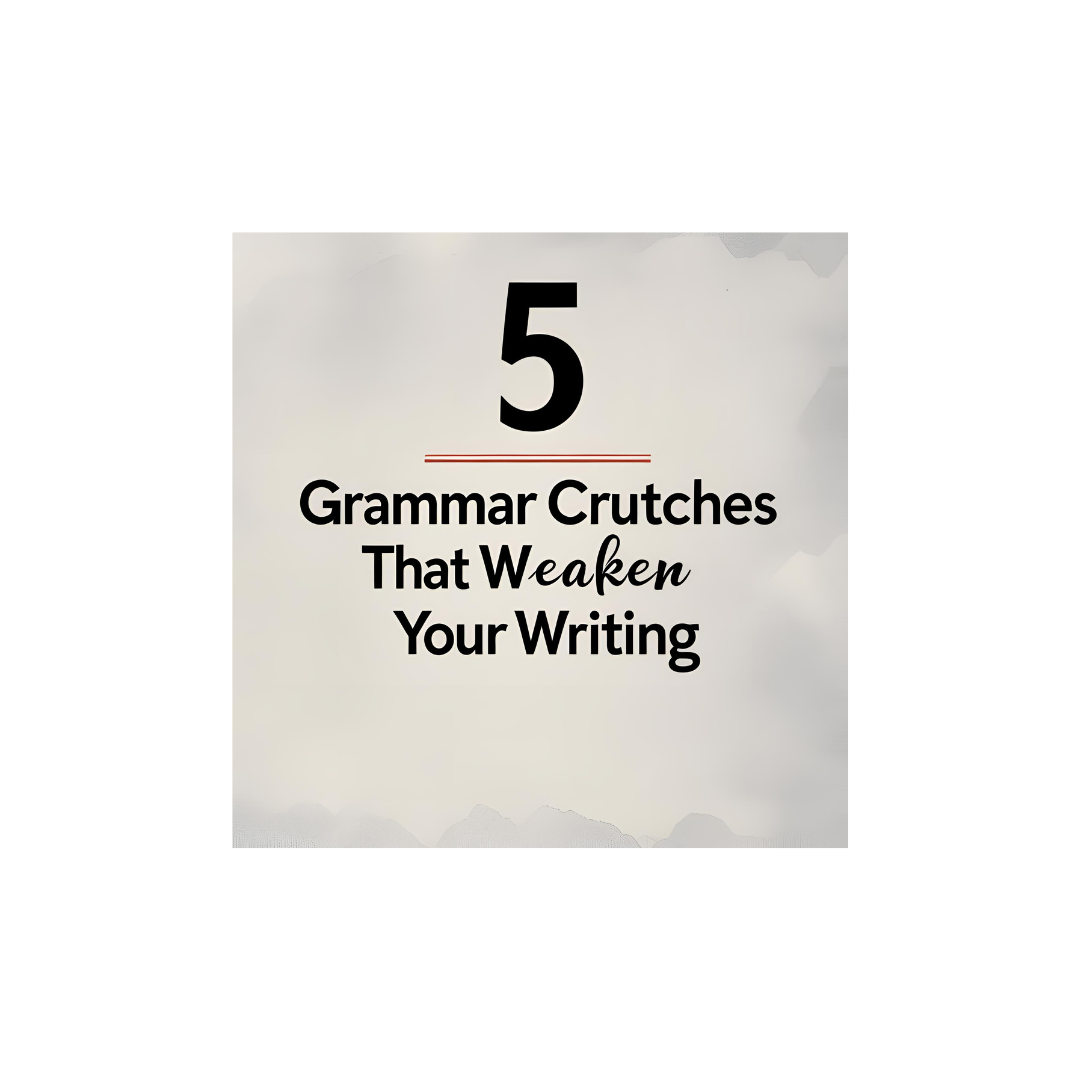
You’ve got a great story, compelling characters, and a solid plot, so why does your writing still feel a little... limp?
The answer might be in the grammar crutches you don’t even realize you’re using.
Many writers fall into patterns that make their prose feel flat or cluttered. These habits—passive voice, filler words, vague verbs—aren’t technically “wrong,” but they weaken your writing and make your sentences less engaging.
In this article, we’ll break down five of the most common grammar crutches that drag your writing down. More importantly, we’ll show you how to spot them, fix them, and write with a sharper, more confident style.
Read more: Stop Using These 5 Grammar Crutches That Weaken Your Writing
- Details
- Hits: 1243
Have you ever started a book with high hopes—only to stumble over grammar mistakes that pulled you out of the story? You’re not alone. Grammar errors don’t just annoy readers; they can silently sabotage your entire book by breaking immersion, causing confusion, and making you look unprofessional.
In today’s competitive market, readers have zero tolerance for sloppy writing. In this article, we’ll explore exactly why readers quit books over bad grammar—and share practical tips to help you keep your audience hooked from the first page to the last.
Read more: Why Readers Quit Your Book Over Bad Grammar (And How to Fix It)
- Details
- Hits: 3401
- Social Media Image:

How to Master This Tricky Pair in Under 3 Minutes
It’s one of the most common grammar mistakes in writing—and one of the easiest to fix. Whether you're drafting a novel, writing blog posts, or sending emails, misusing its and it’s can make your work look rushed or unpolished. In this quick guide, we’ll clear up the confusion once and for all.
What’s the Difference Between Its and It’s?
Let’s break it down:
- Its is a possessive pronoun, meaning it shows ownership.
Example: The dog chased its tail. - It’s is a contraction of it is or it has.
Example: It’s going to be a long day.
Example: It’s been a while since we talked.
They sound exactly the same, but the meaning and grammar are totally different.
Read more: Its vs. It’s: The Tiny Grammar Mistake That Makes a Big Difference